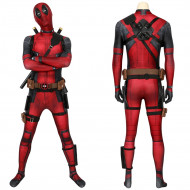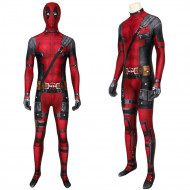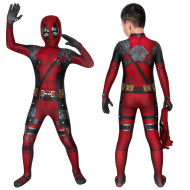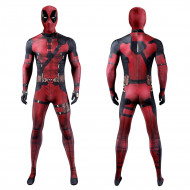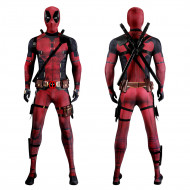
Deadpool costumes have a surprisingly specific identification problem. Almost every version is immediately recognizable as Deadpool, but several designs are similar enough that product titles and promotional photos do not always make the differences obvious.
The easiest way to tell them apart is not to compare every seam or printed panel. Start with the features that change the overall appearance of the costume:
the balance of red, black, or gray
the chest design
the amount of external tactical gear
the belt and visible hardware
the mask and eye treatment
For most buyers, four Deadpool costume families are worth separating:
the classic comic-inspired look
the Deadpool and Deadpool 2 movie design family
the 2024 Deadpool & Wolverine suit
the gray-and-black X-Force version
The main thing to understand is that the first two Deadpool movies do not use two radically different main costumes. For shopping and general version identification, they are more useful to treat as one early movie family. The clearer live-action redesign arrives with Deadpool & Wolverine.
The Main Deadpool Costume Versions at a Glance
| Version | Fastest way to recognize it | Overall visual impression |
|---|---|---|
| Classic comic Deadpool | Clean red-and-black color blocking with relatively simple construction | Graphic and superhero-like |
| Deadpool / Deadpool 2 | Darker red, segmented construction, utility gear, holsters, and straps | Tactical and rugged |
| Deadpool & Wolverine | Brighter red, revised torso design, and more visible contrasting hardware | Cleaner and higher-contrast |
| X-Force Deadpool | Gray-and-black palette instead of the standard red-and-black | Darker and more unusual |
These broad signals are usually enough to identify the correct version family before you start comparing smaller details such as glove construction, boot design, individual panels, or holster placement.
Classic Comic Deadpool Keeps the Design Graphic
The classic Deadpool look is built around a simple visual idea: strong red-and-black shapes.
Red dominates the costume, while black frames the eyes and breaks up parts of the torso, arms, and legs. A utility belt, pouches, swords, and weapons reinforce the mercenary side of the character, but the basic costume still reads as a superhero design rather than a heavily constructed tactical suit.
That difference matters when you view the costume from a distance.
A comic-inspired Deadpool is recognized mainly through the red-and-black color blocking, mask shape, and eye patches. Fine surface texture and complicated panel construction are much less important to the character's identity.
The large black eye surrounds against a red mask do especially heavy visual work. Even when smaller details are simplified, those shapes make the face immediately recognizable.
This is why a classic-inspired Deadpool costume can still look convincing without reproducing the dense construction of the movie suits. Its visual language is intentionally cleaner.
If you want a Deadpool costume that feels more like a superhero design than tactical equipment, the comic-inspired family is the natural place to start.
The 2016 Movie Suit Makes Deadpool Look More Tactical
The first Deadpool movie keeps the familiar red-and-black identity but changes how the costume appears to be built.
Instead of relying mainly on large graphic color blocks, the movie design introduces more segmentation, texture, straps, pouches, holsters, and layered equipment.
The difference is cumulative.
The torso is broken into multiple sections rather than reading as one clean red shape. Black panels interrupt the body more heavily. A utility belt adds visual weight at the waist, while thigh holsters broaden the lower silhouette. Shoulder straps and sword equipment create additional lines across and behind the body.
The character is still unmistakably Deadpool, but the emphasis shifts.
A classic comic suit reads as a superhero costume with mercenary accessories. The early movie suit makes the mercenary equipment part of the costume's basic visual identity.
The darker red changes the overall impression
The early movie costume generally uses a more subdued red than many classic comic interpretations.
That darker color reduces the visual separation between the red body and black accessories. From a distance, the costume can therefore appear denser and more unified, especially when the belt, straps, thigh gear, and black torso sections are viewed together.
For buyers trying to reproduce the appearance of Ryan Reynolds in the first two solo movies, that darker tactical look is more useful as an identification clue than tiny differences in stitching.
External equipment changes the silhouette
The movie suit is not defined only by what is printed or sewn into the jumpsuit.
Separate equipment changes the actual outline of the wearer.
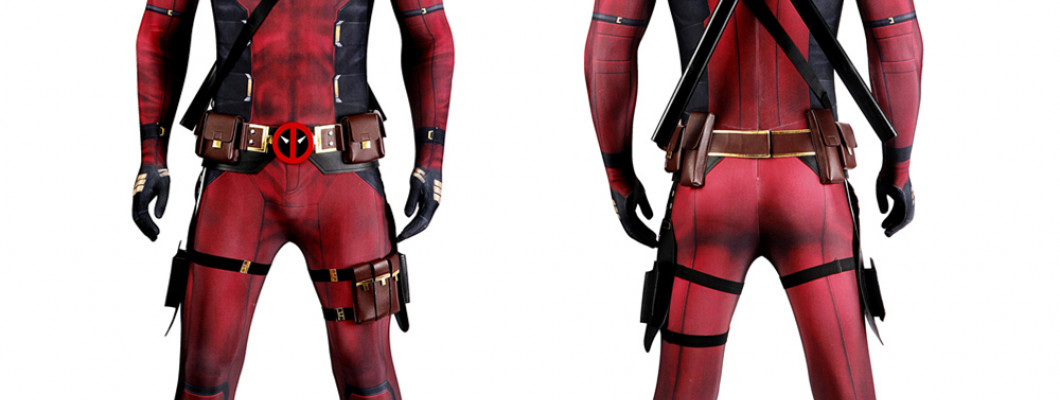
A utility belt creates width around the waist. Thigh holsters project away from the legs. Shoulder straps break up the torso. Sword equipment adds structure behind the shoulders and upper back.
This is important when comparing costumes online because two products can use similar red-and-black patterns while producing very different results once worn.
A printed holster or strap preserves the graphic information but stays close to the body. A separate physical piece adds depth and changes the silhouette.
For movie-style Deadpool costumes, that distinction can matter more than small differences in surface texture.
Is the Deadpool 2 Costume a Completely Different Version?
Not for most buyers.
The main Deadpool costume in Deadpool 2 remains closely connected to the design established in the first movie. Although revisions were considered during production, the final main costume does not create a completely new visual identity comparable to the redesign seen in Deadpool & Wolverine.
For general costume shopping, it therefore makes more sense to treat the 2016 and 2018 suits as one early movie design family.
That does not mean the two productions are identical in every technical detail. Someone building a highly specific screen replica may care about construction changes, materials, or production differences.
But that is a much narrower task.
For a buyer simply trying to recognize which Deadpool costume a listing represents, splitting 2016 and 2018 into two major categories usually creates more confusion than useful information.
What about the gray-looking suit in Deadpool 2?
Some images from Deadpool 2 can make Deadpool's normal costume appear gray, dusty, or desaturated because of damage, lighting, or debris.
That should not automatically be confused with the X-Force costume.
X-Force Deadpool is better identified by an intentional gray-and-black color scheme, not by a normal red costume temporarily appearing dirty or faded.
Deadpool & Wolverine Gives the Movie Suit a Clearer Redesign
The 2024 Deadpool & Wolverine costume is much easier to separate from the earlier movie family.
You do not need to memorize every seam. Three areas do most of the identification work:
the brighter red
the revised torso and chest layout
the belt, straps, and contrasting hardware
Together, those changes make the 2024 suit feel cleaner and more visually separated while still keeping the tactical equipment associated with the live-action character.
The Brighter Red Makes the 2024 Suit Easier to Recognize
Color is one of the fastest ways to separate the 2024 design from the earlier movie costume.
The first two movies use a comparatively subdued red. The Deadpool & Wolverine suit presents the red more strongly against the black sections.
That higher contrast makes the body pattern easier to read in full-body photos and smaller product thumbnails.
Instead of the red and black blending into one dark tactical mass, the major sections of the 2024 costume remain more visually distinct.
This does not mean the newer suit has less construction or fewer details. It simply means those details are easier to see because the color contrast is stronger.
For shoppers scanning multiple Deadpool listings, the brighter red should therefore be one of the first things to check.
The Chest Is One of the Best Version Markers
Once the color points toward the 2024 costume, look at the center of the torso.
The chest construction is arranged differently from the earlier movie design. The red and black sections, panel divisions, and surrounding straps create a different visual rhythm across the upper body.
This makes the chest much more useful than trying to identify a version from an isolated glove, boot, or leg panel.
In a front-facing product image, the torso occupies enough visual space that the overall arrangement remains noticeable even when fine stitching disappears.
That is why chest construction should be treated as a primary identification clue rather than an obscure replica detail.
Use the Belt and Hardware to Confirm the 2024 Design
The belt is helpful, but the circular Deadpool logo alone is not enough to identify the version. Similar logo treatment appears across multiple Deadpool designs.
Instead, examine the buckle together with the surrounding gear.
The 2024 costume uses more visible contrasting hardware around parts of the belt, straps, and equipment. Those brighter metallic or gold-toned accents stand out against the red-and-black body more clearly than much of the darker equipment on the earlier movie suit.
That makes the waist and hardware useful as confirmation clues.
If the brighter red and revised chest already point toward Deadpool & Wolverine, the more visible hardware can strengthen that identification.
The order matters. Start with the large visual pattern, then use smaller hardware details to confirm it.
X-Force Deadpool Is Defined First by Its Color
X-Force Deadpool is much easier to separate from the standard versions because the largest change appears immediately.
The familiar red is replaced by gray.
Black still frames the mask and remains throughout the costume, so the character is recognizably Deadpool. But the overall visual impression changes as soon as the dominant red disappears.
A normal Deadpool costume depends heavily on red against black. X-Force replaces that bright identity with a darker gray-and-black palette.
Because color affects the entire body, this difference usually registers before viewers notice smaller details such as the belt, chest panels, or shoulder straps.
That makes X-Force a strong option for someone who wants a Deadpool design that remains recognizable without using the standard red-and-black appearance.
It can also work particularly well in a group where another person is already wearing a traditional Deadpool costume, since the different palette keeps the two versions visually separate.
How to Identify an Unlabeled Deadpool Costume
Product listings do not always make the source version clear. Apparently identifying the costume being sold would occasionally make online shopping too efficient.
If the title is vague, check the costume in this order.
1. Start with the overall color balance
Color gives you the fastest first filter.
Clean, bright red with strong black sections: likely a comic-inspired design or the newer 2024 movie style.
Darker, more muted red combined with dense black gear: more likely the early movie family.
Gray and black: likely X-Force.
Do this before zooming into individual seams.
If the broad color treatment already puts the costume in the wrong family, examining tiny construction details will not rescue the identification.
2. Check the chest construction
The torso usually contains more useful version information than the arms or lower legs.
Look at how the red and black sections divide the chest.
Ask:
Is the torso relatively clean and graphic?
Is it broken into numerous tactical-looking sections?
Do black areas cut heavily into the red?
Are visible straps crossing or framing the upper body?
Does the chest arrangement resemble the cleaner 2024 redesign or the darker early movie construction?
These questions can quickly separate a comic-inspired costume from a movie-style design and then help distinguish the two movie families.
3. Inspect the belt and surrounding hardware
Once you have narrowed the costume down, move to the waist.
The Deadpool buckle itself is useful but not decisive because the logo appears across several versions.
Look instead at the complete waist treatment:
how prominent the buckle is
how the pouches are arranged
whether the straps are separate physical pieces
whether contrasting hardware is clearly visible
These details work best as secondary evidence after the color and chest have already pointed toward a version.
4. Look at the harness, holsters, and thigh gear
External equipment can reveal how tactical the costume is intended to look.
Separate physical straps and holsters sit above the body and create depth. Printed versions preserve some of the visual information but do not change the outline in the same way.
A thigh holster adds width to the leg. A belt and pouches create more weight at the waist. A shoulder harness cuts across the upper body, while sword equipment extends the silhouette behind the shoulders.
Those differences remain noticeable even when the viewer cannot see the fabric texture or stitching.
For this reason, external gear is especially important when comparing a simple jumpsuit package with a more complete movie-style set.
5. Use the mask as a final confirmation
Deadpool's mask is one of the character's most recognizable features, but that actually makes it less useful as the first version filter.
Nearly every major version keeps the same basic idea: a red or gray mask with black eye surrounds and white eye shapes.
Once the rest of the costume suggests a particular family, the mask becomes more useful.
Look at:
the size of the black eye patches
the proportions of the white eyes
how graphic or narrow the eye treatment appears
whether the mask matches the cleaner comic style or the more constructed movie presentation
The mask should confirm the identification rather than carry the entire decision by itself.
Which Deadpool Costume Version Should You Choose?
The versions do more than represent different release years. They create different visual results once worn.
Choose the 2016 / Deadpool 2 style for the early movie look
If the first two Ryan Reynolds movies define Deadpool for you, start with the early movie design family.
Its darker red, layered construction, thigh gear, utility belt, and visible straps produce the most familiar version of the original live-action costume.
This is also the strongest choice if you prefer the character to look more like a tactical mercenary than a bright comic-book superhero.
The equipment is an important part of that effect, so compare not only the jumpsuit pattern but also what external pieces are included.
Choose the 2024 suit for Deadpool & Wolverine
If your target is specifically Deadpool & Wolverine, choose a costume built around the 2024 design instead of assuming any movie-style red-and-black Deadpool will be close enough.
The brighter red and revised torso are large enough visual differences that an earlier movie suit will not produce the same appearance.
The 2024 version is particularly suitable if you like the layered movie equipment but want stronger color contrast and a cleaner superhero presentation.
When comparing listings, identify the brighter red and chest layout first. Use the belt and contrasting hardware as supporting clues.
Choose X-Force for the biggest color change
X-Force produces the most immediate visual departure without losing the character's identity.
The gray-and-black palette keeps the familiar mask and overall Deadpool design but removes the dominant red associated with most other versions.
That makes it easy to recognize as an alternate interpretation rather than simply another red movie costume.
If your main goal is to wear Deadpool while avoiding the standard red-and-black appearance, X-Force is the clearest option.
Choose a classic-inspired suit for a cleaner superhero look
A comic-inspired costume works best when you prefer large graphic shapes over dense tactical layering.
Its strength comes from the basic Deadpool design rather than from numerous belts, panels, clips, and holsters.
Because the red-and-black pattern itself does most of the identification work, the costume can remain visually convincing even with fewer external pieces.
That makes the classic approach cleaner, not simply less detailed.
A Deadpool Version and a Full Set Are Two Different Decisions
Once you know which Deadpool design you want, there is still another question:
Do you want the basic costume, or do you want the external equipment that completes the movie silhouette?
Those are package differences. They do not automatically represent different costume versions.
For example, XheroSuits lists both a 2024 Deadpool 3 Deadpool Cosplay Jumpsuit and a 2024 Deadpool 3 Deadpool Cosplay Jumpsuit Full Set.
Both belong to the same 2024 Deadpool design family.
The standard jumpsuit listing includes the jumpsuit and mask.
The full-set version adds separate pieces including the belt, shoulder strap, bag, additional straps, and sword cover.
That distinction matters because external pieces affect more than completeness.
A separate belt projects away from the waist. Straps sit above the torso. Added gear creates more visible layering, and sword equipment changes the outline behind the body.
In other words, a full set can produce a substantially more dimensional movie-style silhouette even when the underlying jumpsuit is based on the same version.
If your priority is simply the recognizable red-and-black body design, a jumpsuit-and-mask configuration covers the core visual identity.
If your priority is the layered appearance of the movie costume, the external belt, harness, and related equipment become much more important.
The same general logic applies to earlier-style Deadpool listings. XheroSuits also offers Wade Wilson jumpsuit and full-set configurations, but those product names do not identify the costumes as exact 2016 or 2018 film replicas.
It is therefore safer to treat them as Deadpool/Wade Wilson designs rather than assigning a specific movie source that the listing itself does not claim.
Match the Version Before You Compare Package Extras
Deadpool costume shopping becomes much easier when the decisions are made in the right order.
First, identify the costume version.
Use the large visual cues:
overall color
chest design
tactical layering
external gear
belt and hardware
Second, check what the package includes.
A listing may show a familiar costume design but sell only the jumpsuit and mask, while another version of the same product adds belts, straps, bags, or sword equipment.
Only after the version and package are clear should smaller options such as zipper configuration, footwear setup, or other customization choices become deciding factors.
Starting with those extras reverses the process.
You can end up comparing two products based on optional features even though they represent different Deadpool designs. A larger or more expensive package is not automatically the better choice if it is based on the wrong version.
If you want Deadpool & Wolverine, start with the 2024 design.
If you want the appearance associated with the first two Ryan Reynolds movies, start with the darker early movie family.
If you want the gray alternate look, start with X-Force.
If you prefer the cleaner graphic identity of the comics, choose a classic-inspired design.
Get the version right first. Then decide how much gear you actually need.