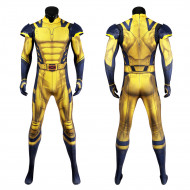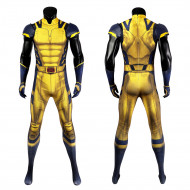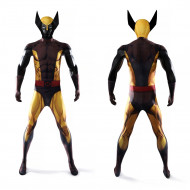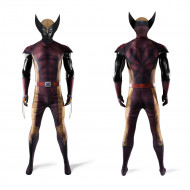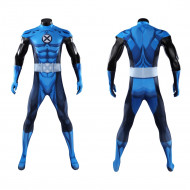
Two Wolverine costumes can both be yellow and blue and still represent designs created decades apart. The easiest way to tell them apart is not by counting tiny seams or memorizing comic issues. Start with four larger details: the mask, the color blocking, the waist, and the overall silhouette
Classic Wolverine uses exaggerated comic-book shapes and large blocks of yellow and blue. The brown costume keeps much of that recognizable geometry but changes the entire mood through its earthier palette. Astonishing Wolverine removes some of the older visual breaks, while the Deadpool & Wolverine suit turns familiar comic colors into a much more constructed live-action design.
Wolverine Costume Versions at a Glance
| Version | Fastest Way to Identify It | Overall Visual Effect | Best Choice If You Want |
|---|---|---|---|
| Original Wolverine | Small cowl ears and whisker markings | Early, slightly unusual comic design | Wolverine's first appearance |
| Classic yellow-and-blue | Long black mask fins, blue trunks, bright yellow body | Bold and immediately recognizable | Traditional Wolverine |
| Brown-and-tan | Brown and yellow-orange palette with red belt | Earthier and less brightly superheroic | Classic Wolverine with a different mood |
| Astonishing X-Men | No blue trunks, blue side panels, smaller cowl ears | Cleaner and more streamlined | Modern comic-book Wolverine |
| X-Force | Black-and-gray suit with red mask lenses | Dark and tactical | A stealth-oriented Wolverine |
| Krakoa | Brown/orange palette on more modern costume geometry | Old colors with a contemporary structure | Modern comics with brown-suit influence |
| Deadpool & Wolverine | Structured yellow torso, dark blue panels, pronounced shoulders | More physical and armor-like | Hugh Jackman's 2024 Wolverine |
Original Wolverine vs. the Classic Yellow-and-Blue Costume
Wolverine's first costume already established most of the visual language that would follow: a yellow body, black tiger stripes, blue gloves and boots, blue trunks, shoulder pieces, and a red belt.
The easiest identifier is the mask.
In Wolverine's original appearance, the cowl had relatively small ears and whisker-like markings around the mouth. When he joined the X-Men, the redesign stretched those black ears into the much longer points now associated with the character and removed the whiskers.
That sounds like a small alteration on paper. Visually, it is not.
The extended black fins make the classic mask wider and more aggressive. They frame the face so strongly that the silhouette can identify Wolverine even before the claws become visible.
The classic suit also relies on large, separated color zones. Yellow dominates the torso and thighs, while the blue trunks, gloves, boots, shoulders, and mask interrupt it. Instead of one continuous body line, the costume reads as several bold graphic shapes stacked together.
That is part of the reason classic yellow-and-blue remains the safest Wolverine costume for instant recognition. It is bright, exaggerated, and unmistakably designed as a comic-book superhero suit.
If your main priority is simply "I want people to recognize Wolverine immediately," this remains the strongest reference point.
The Brown Wolverine Costume Changes More Than the Colors
The brown costume debuted in Uncanny X-Men #139 and became one of Wolverine's defining looks through much of the 1980s. It retained familiar elements such as the long-eared cowl, red belt, and Wolverine-style boot shapes, but replaced the bright blue portions of the costume with dark brown and used warmer yellow-orange tones through the body.
The effect is larger than a palette swap.
Classic yellow-and-blue Wolverine has strong cool-versus-warm contrast. Bright yellow is interrupted by saturated blue, creating a costume that remains visually loud even from across a room.
The brown version compresses that contrast. Dark brown and ochre sit closer together visually, so the costume feels more unified and less like a collection of separate superhero color blocks.
The pointed mask and side shapes still identify Wolverine. What changes is the mood.
The brown costume looks less like a standard team uniform and more closely matches Wolverine's rougher, more solitary image. It is still unmistakably comic-book Wolverine, just without the brightest part of his traditional palette.
For cosplay, that makes the brown suit a useful alternative for someone who wants a classic Wolverine design without choosing the most obvious yellow-and-blue version.
XheroSuits currently lists an X-Men Wolverine The Brown Costume Cosplay Jumpsuit based on this version, making it a direct option for buyers looking specifically for the brown-era appearance rather than a recolored version of the standard yellow-and-blue suit.
Astonishing X-Men Makes Yellow-and-Blue Look More Streamlined
The Astonishing X-Men costume returned Wolverine to yellow and blue without simply restoring the older design unchanged.
Its most useful visual markers include blue side panels, yellow tiger stripes, a blue belt, smaller shoulder pads, smaller cowl ears, and, critically, no blue trunks.
Removing the trunks changes the proportions immediately.
On the classic suit, the blue waist area cuts horizontally across the body. Your eye reads yellow torso, blue waist, then yellow legs.
Astonishing Wolverine removes that heavy interruption. The yellow center extends farther vertically, while the blue side panels frame it from the sides. The result is a longer, cleaner central body shape.
The smaller shoulder elements and shorter cowl ears reinforce that effect. Classic Wolverine pushes outward through the shoulders and mask. Astonishing Wolverine looks more contained.
At a convention or in a group X-Men cosplay, both versions still read clearly as Wolverine. The easiest distinction is to check the waist first: blue trunks point toward the classic design, while an uninterrupted yellow center points toward Astonishing X-Men.
Deadpool & Wolverine Turns the Comic Suit Into a Physical Screen Costume
The yellow-and-blue suit Hugh Jackman wears in Deadpool & Wolverine is recognizable because it borrows Wolverine's classic color identity. But visually, it operates very differently from a traditional comic bodysuit.
The biggest difference is structure.
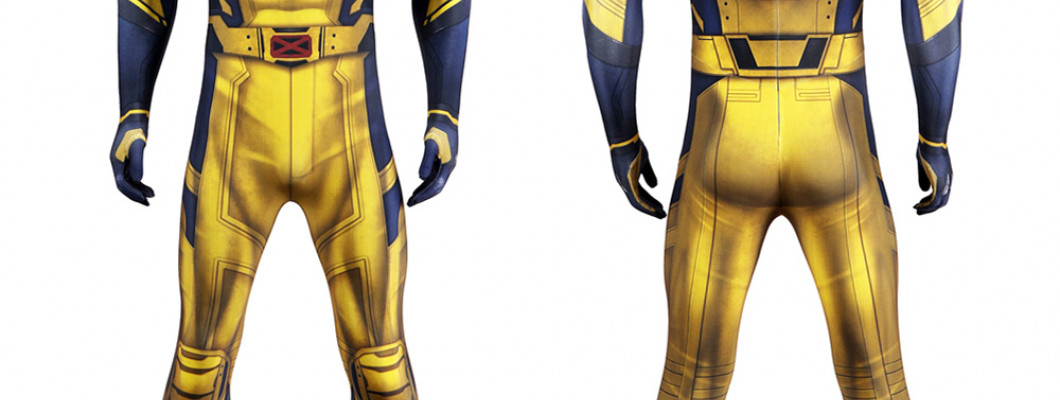
The movie costume has a pronounced chest, defined shoulder shapes, layered-looking panels, and dark blue sections that frame the yellow center of the body. Instead of allowing printed color alone to create Wolverine's proportions, the physical construction helps establish the silhouette.
The film's costume development also treated Wolverine's musculature and outer suit as parts of the same visual problem. The goal was not simply to reproduce yellow-and-blue graphics, but to translate the exaggerated proportions of comic artwork into a three-dimensional screen costume. The cowl required the same kind of translation: a shape that works as a drawing still has to look convincing when built around an actor's head.
That difference matters when comparing cosplay versions.
A classic comic Wolverine suit gets much of its visual identity from:
yellow versus blue
black tiger stripes
blue trunks
oversized cowl points
The movie version relies more heavily on:
a broad upper-body outline
segmented torso shapes
dark panels outlining the yellow chest
pronounced shoulder treatment
the live-action mask
From farther away, both versions can register as yellow-and-blue Wolverine. Closer up, one looks deliberately graphic and comic-like while the other looks more constructed.
Someone trying to represent Hugh Jackman's 2024 Wolverine therefore needs more than the correct colors. A generic classic suit may still read as Wolverine, but it will not reproduce the same torso structure, shoulder shape, panel arrangement, or screen-style cowl.
XheroSuits' Deadpool 3 Wolverine Cosplay Jumpsuit with Mask is specifically based on this live-action interpretation, so it belongs with the movie branch rather than the classic comic design despite sharing the familiar yellow-and-blue palette.
X-Force Wolverine Drops the Bright Colors Entirely
X-Force Wolverine is easier to identify because the palette changes dramatically.
The costume introduced for X-Force in 2008 uses black and gray rather than Wolverine's usual yellow, blue, or brown. The mask also uses red lenses, giving the face a much more severe focal point.
The underlying design still contains recognizable Wolverine shapes, but color no longer does most of the identification work.
That changes how the costume reads from a distance. A classic Wolverine can be recognized through large areas of yellow before smaller details become visible. X-Force Wolverine relies more heavily on the cowl, eye treatment, stripes, and silhouette because the dark values blend together more easily.
The result is a Wolverine who reads as deliberately black-ops rather than simply a darker variation of the standard costume. It is visually distinctive, but less useful as a default choice if immediate mainstream recognition matters most.
Krakoa Wolverine Brings the Brown Palette Into a More Modern Design
During the Krakoa era, Wolverine returned to brown and yellow-orange, but the design did not simply restore the 1980s suit.
The Krakoa costume uses a structure related to Wolverine's later X-Force design while bringing back colors associated with his classic brown costume. In visual terms, it combines an older palette with newer costume geometry.
This makes it easy to confuse with the brown costume if you look only at the colors.
The better identifier is geometry.
The 1980s brown costume retains the strong classic-Wolverine shapes of its era. The Krakoa design applies similar earth tones to a more modern arrangement of panels and costume lines.
For casual recognition, the original brown suit usually communicates "brown Wolverine" faster. Krakoa is more specific: it makes sense when the goal is to represent that particular period of modern Wolverine comics rather than the better-known 1980s costume.
What About Fang, Weapon X, Patch, and Wolverine's Other Looks?
Wolverine has worn far more costumes than a practical versions guide needs to treat equally.
Fang is memorable for its brown coloring and bone-like details, but Wolverine wore the look only briefly. Patch is primarily an alternate identity associated with civilian clothing, while Weapon X represents a very different part of Wolverine's history from his standard X-Men uniforms.
All three matter when recreating a specific comic appearance. For someone simply trying to distinguish the major Wolverine suits, however, the classic yellow-and-blue, brown, Astonishing, X-Force, Krakoa, and Deadpool & Wolverine designs are more useful starting points.
Which Wolverine Costume Version Should You Choose?
For maximum recognition, choose the classic yellow-and-blue costume. The oversized black cowl, bright yellow body, blue accessories, and strong color blocking communicate Wolverine faster than any subtler version.
For a classic comic look with a less vivid palette, choose brown-and-tan. You keep many of Wolverine's most recognizable shapes while getting a noticeably different overall impression.
For yellow-and-blue without the older trunks-heavy design, choose Astonishing X-Men. Its continuous waist and smaller cowl create a cleaner modern-comic silhouette.
For Hugh Jackman's 2024 screen Wolverine, choose the Deadpool & Wolverine version. The torso structure, shoulder silhouette, dark paneling, and live-action cowl matter just as much as the familiar colors.
For a dark tactical Wolverine, X-Force is the clear branch. Black, gray, and red separate it immediately from Wolverine's mainstream yellow, blue, and brown designs.
For a modern comic interpretation of the brown palette, Krakoa combines familiar earth tones with later costume geometry.
Once you know which visual identity you want, the shopping process becomes considerably simpler. XheroSuits' current Wolverine costumes collection includes both Deadpool & Wolverine-inspired yellow-and-blue designs and the brown X-Men version, allowing those two major branches to be compared without treating every Wolverine costume as the same suit with a different paint job.